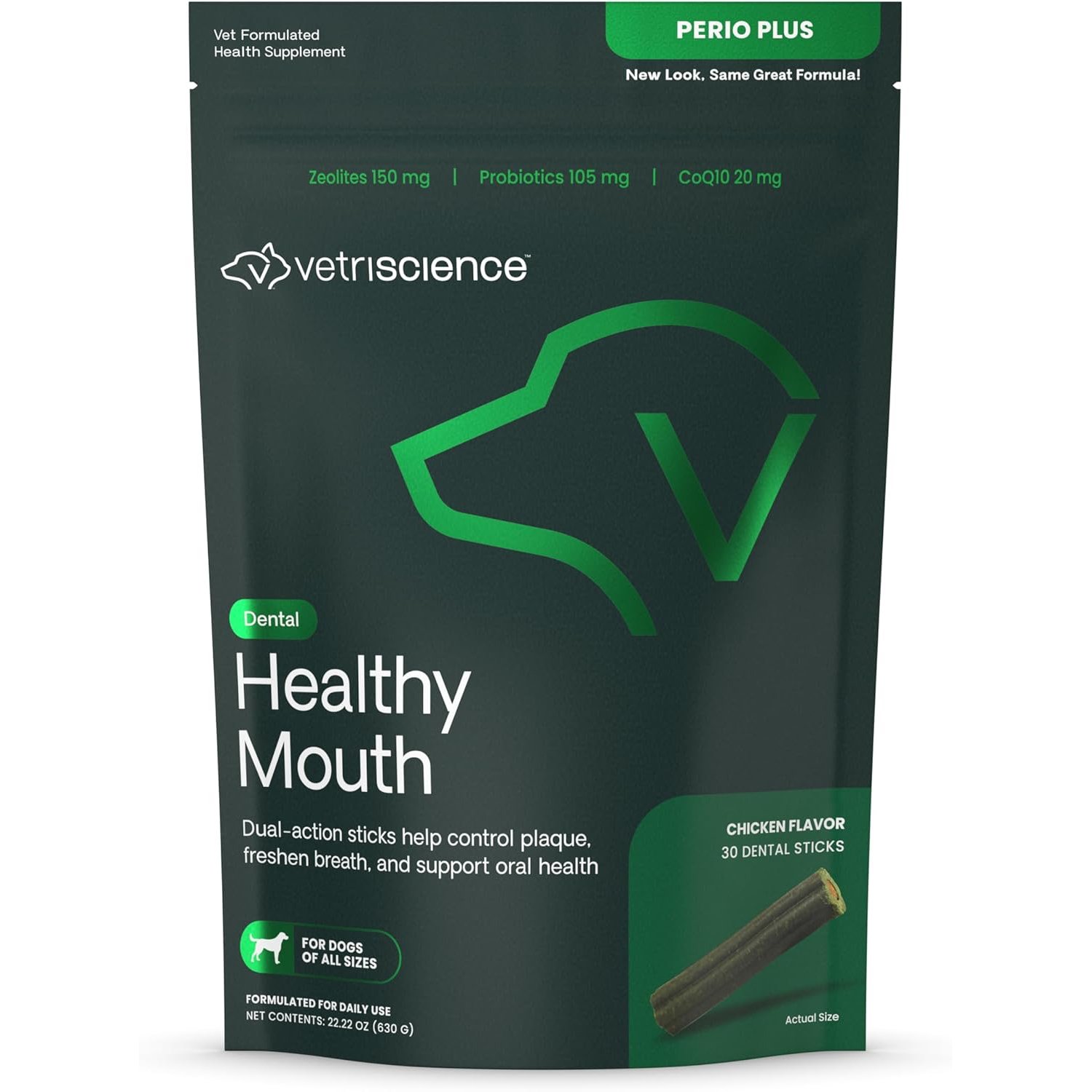
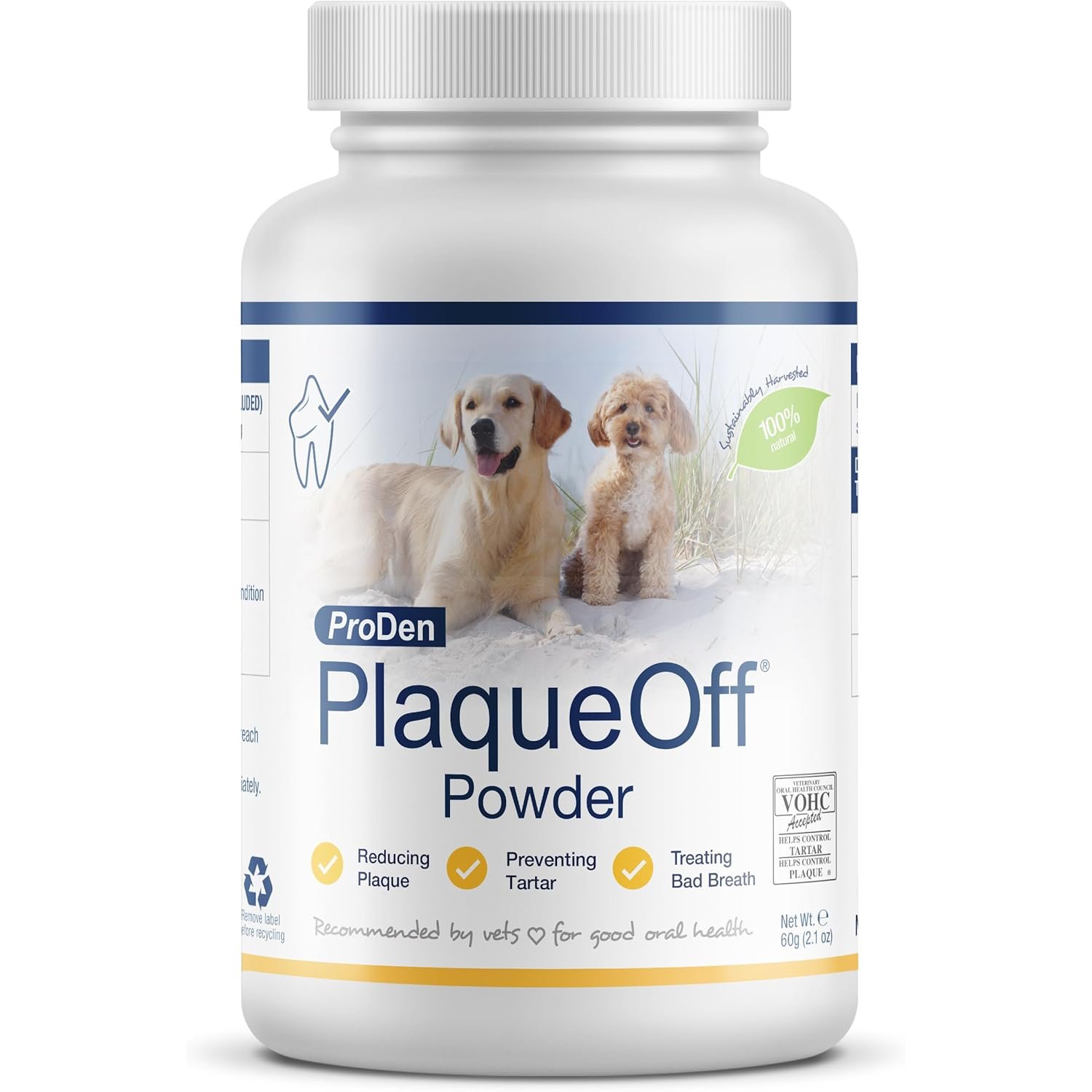
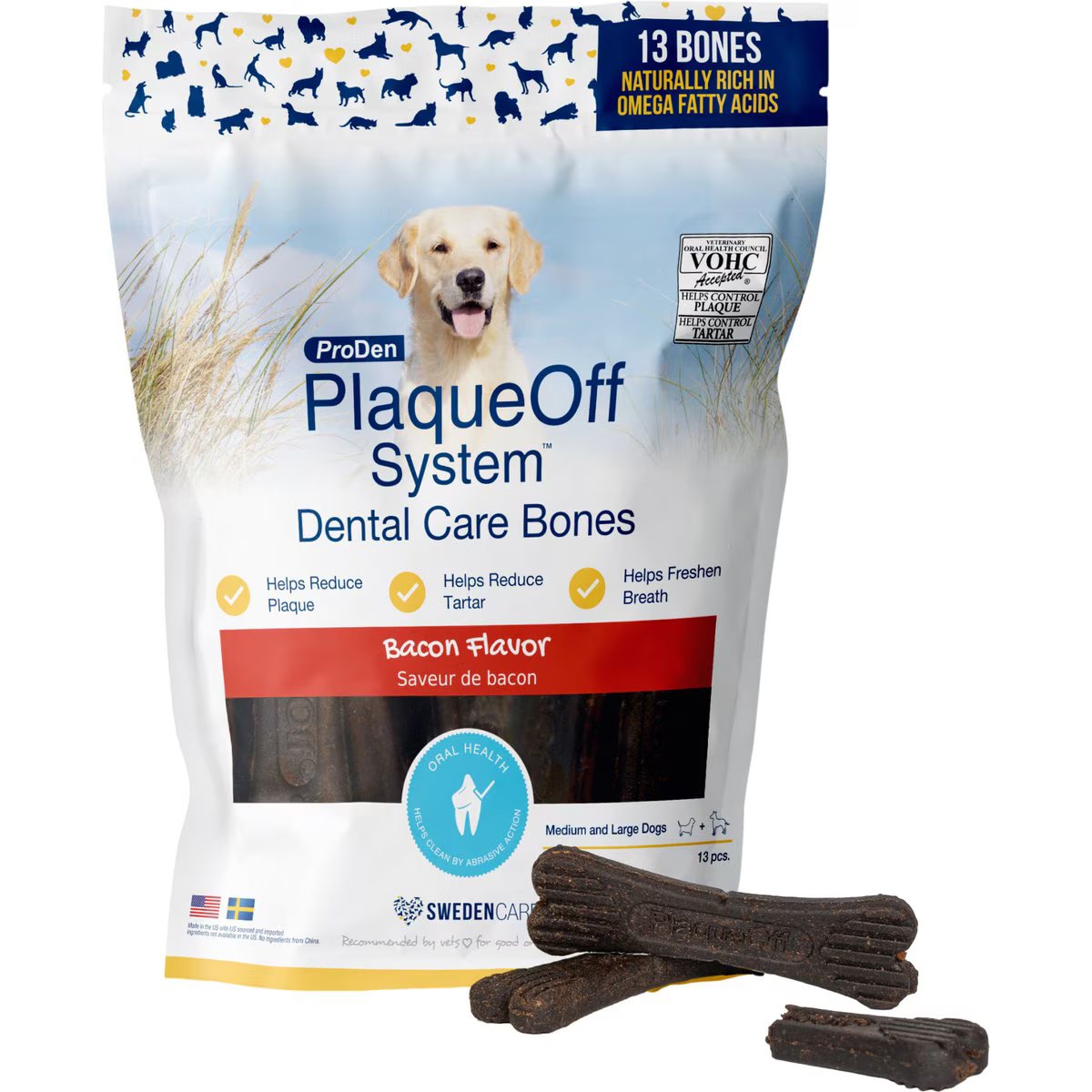
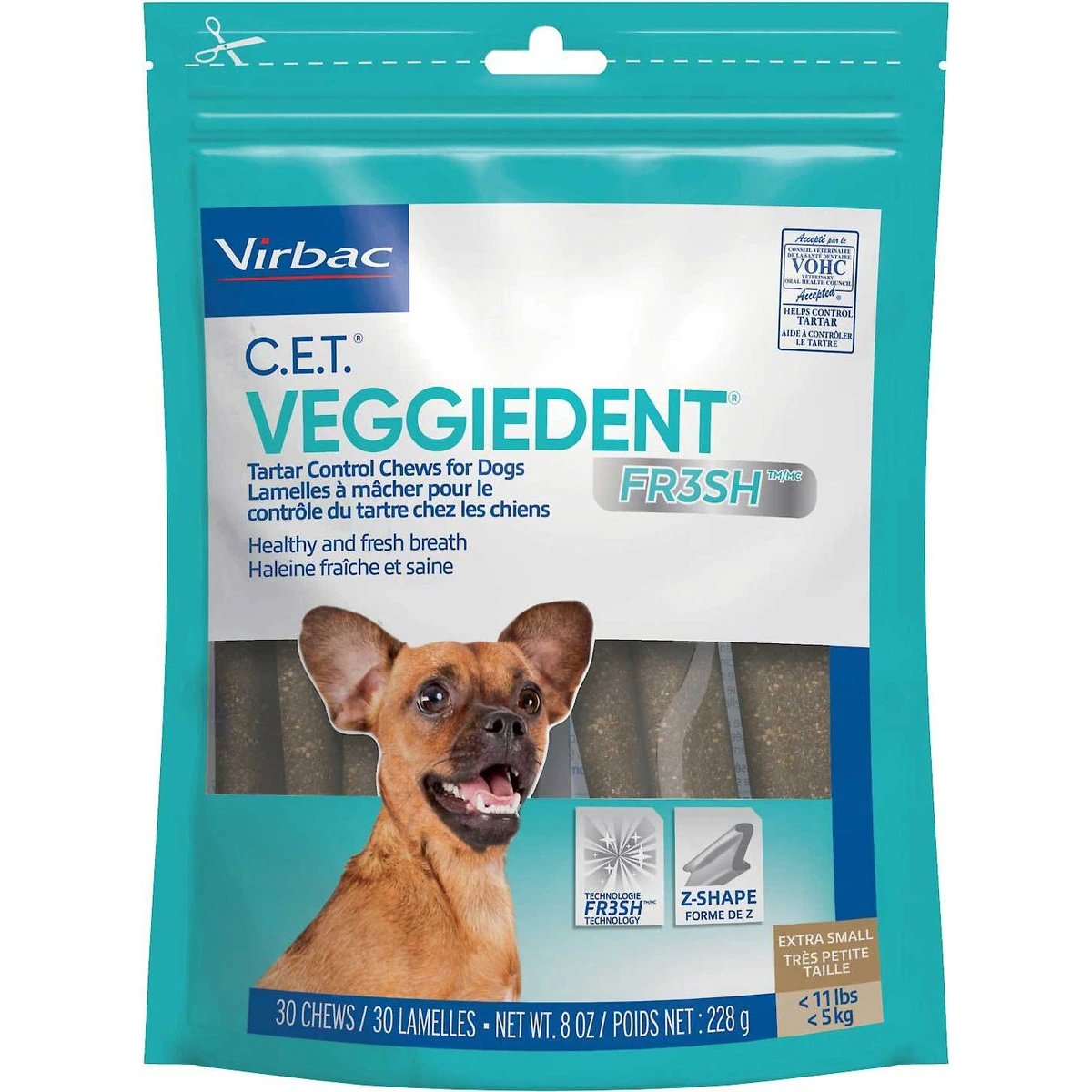
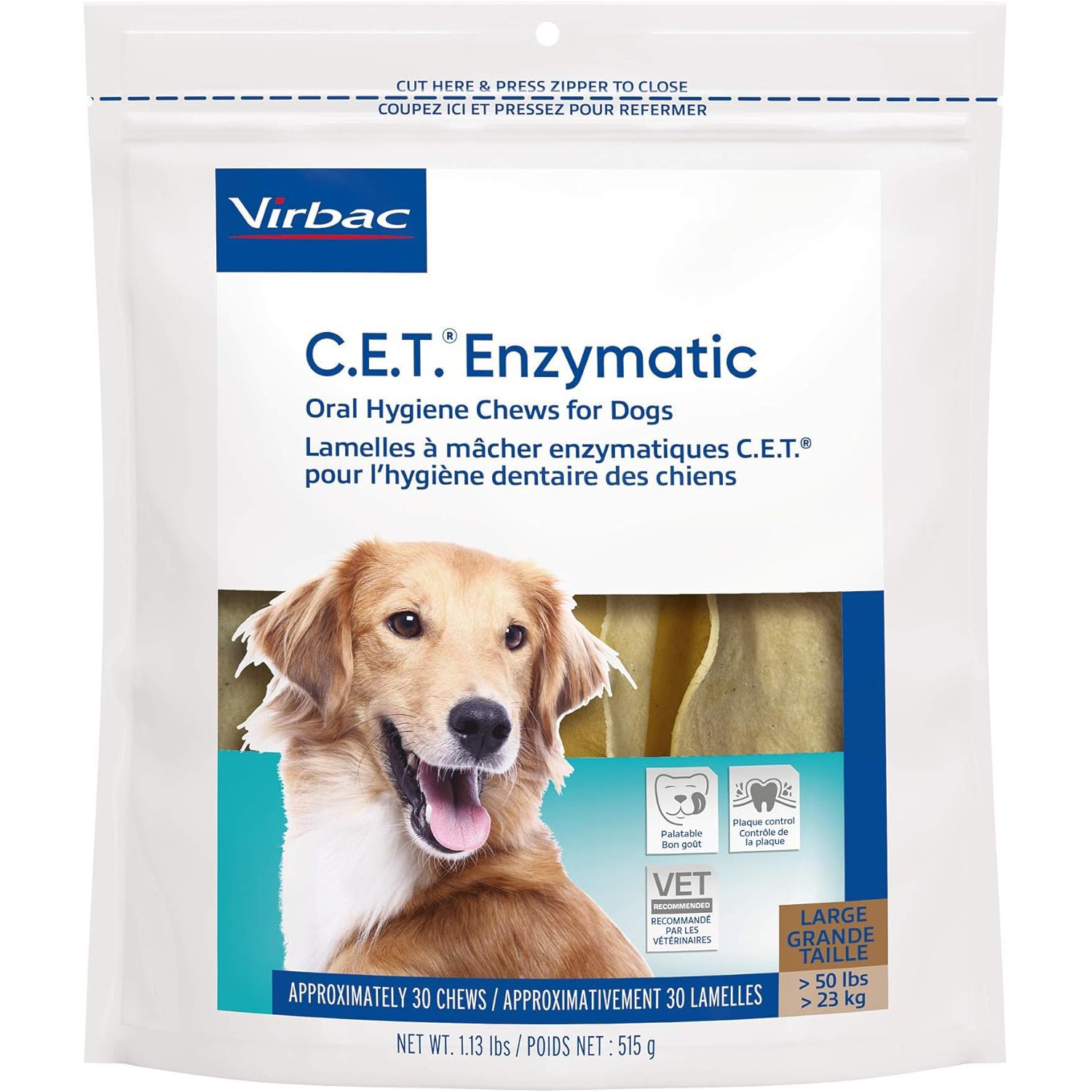
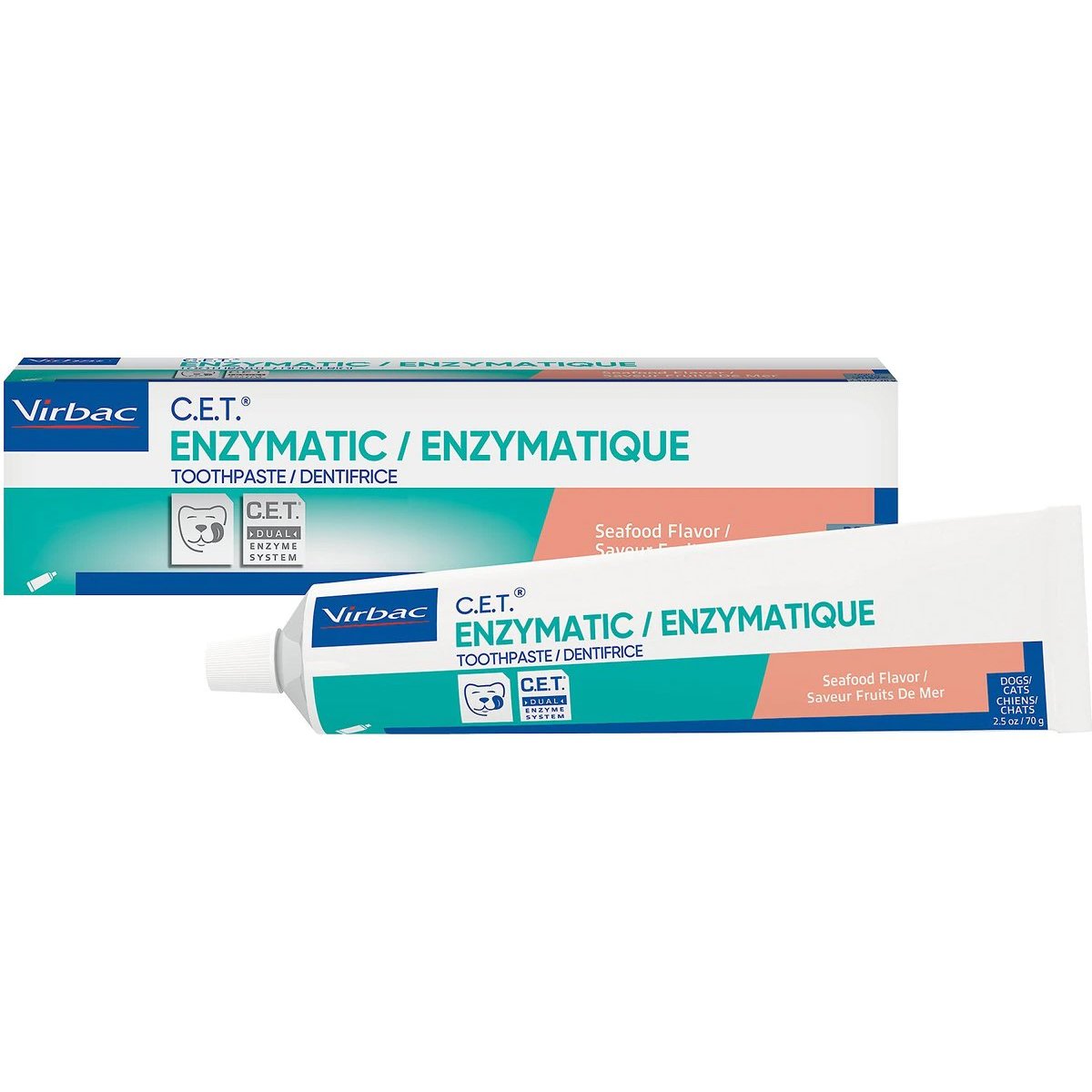
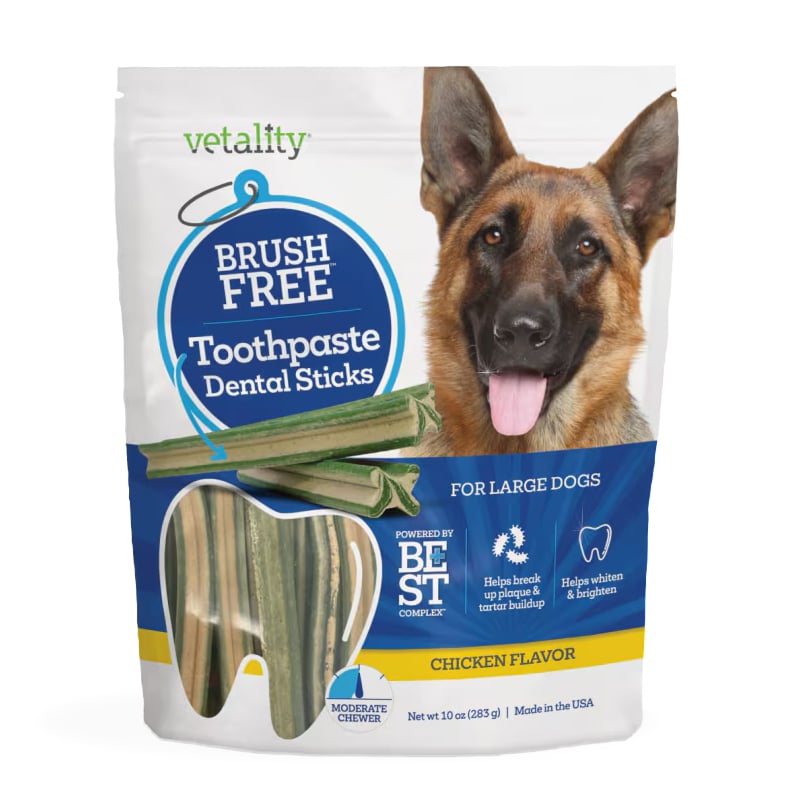
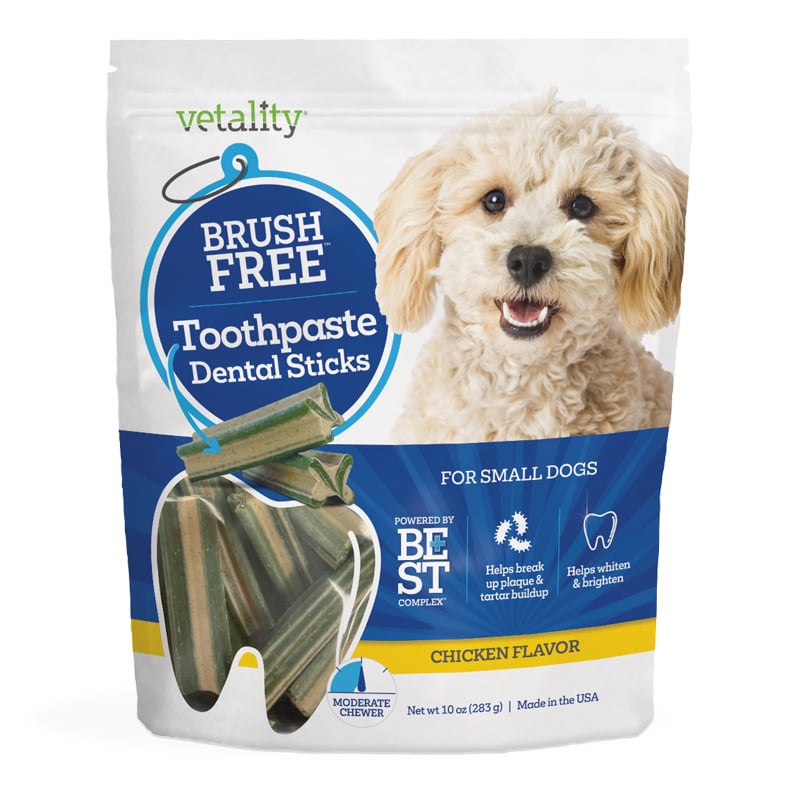
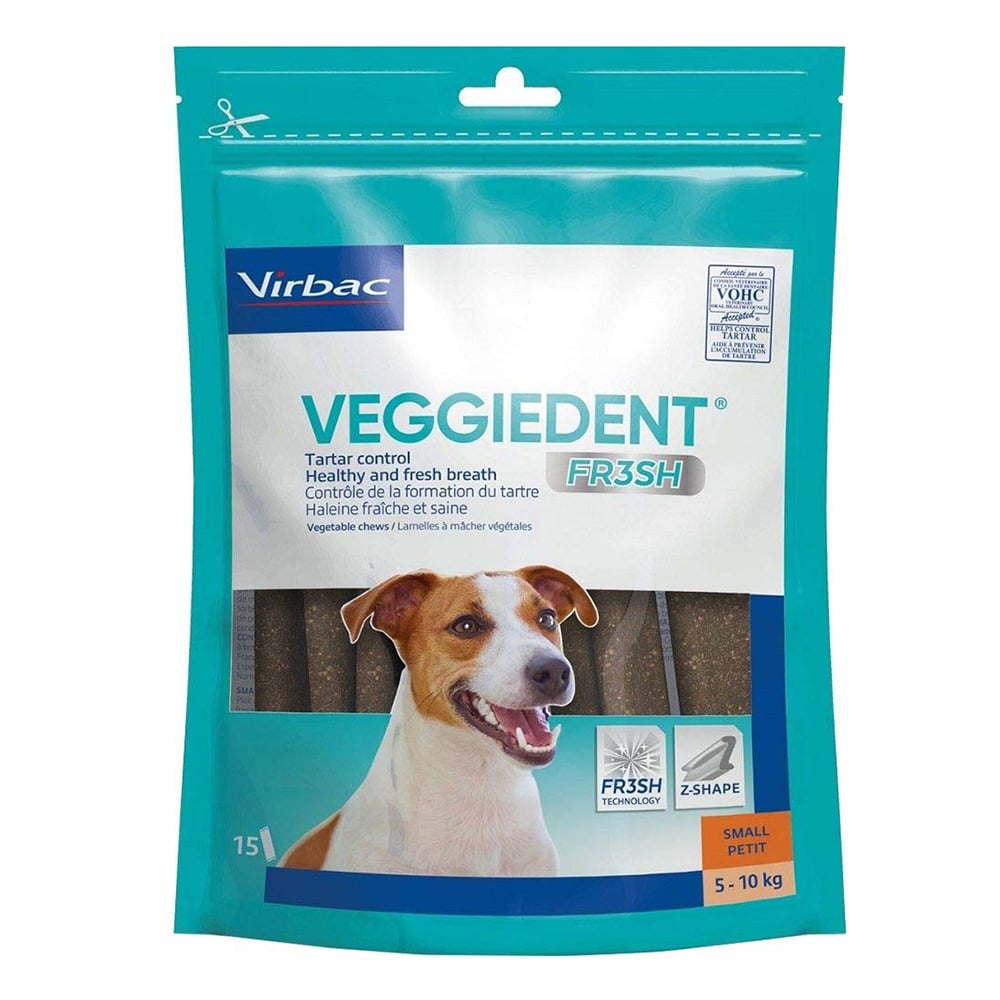
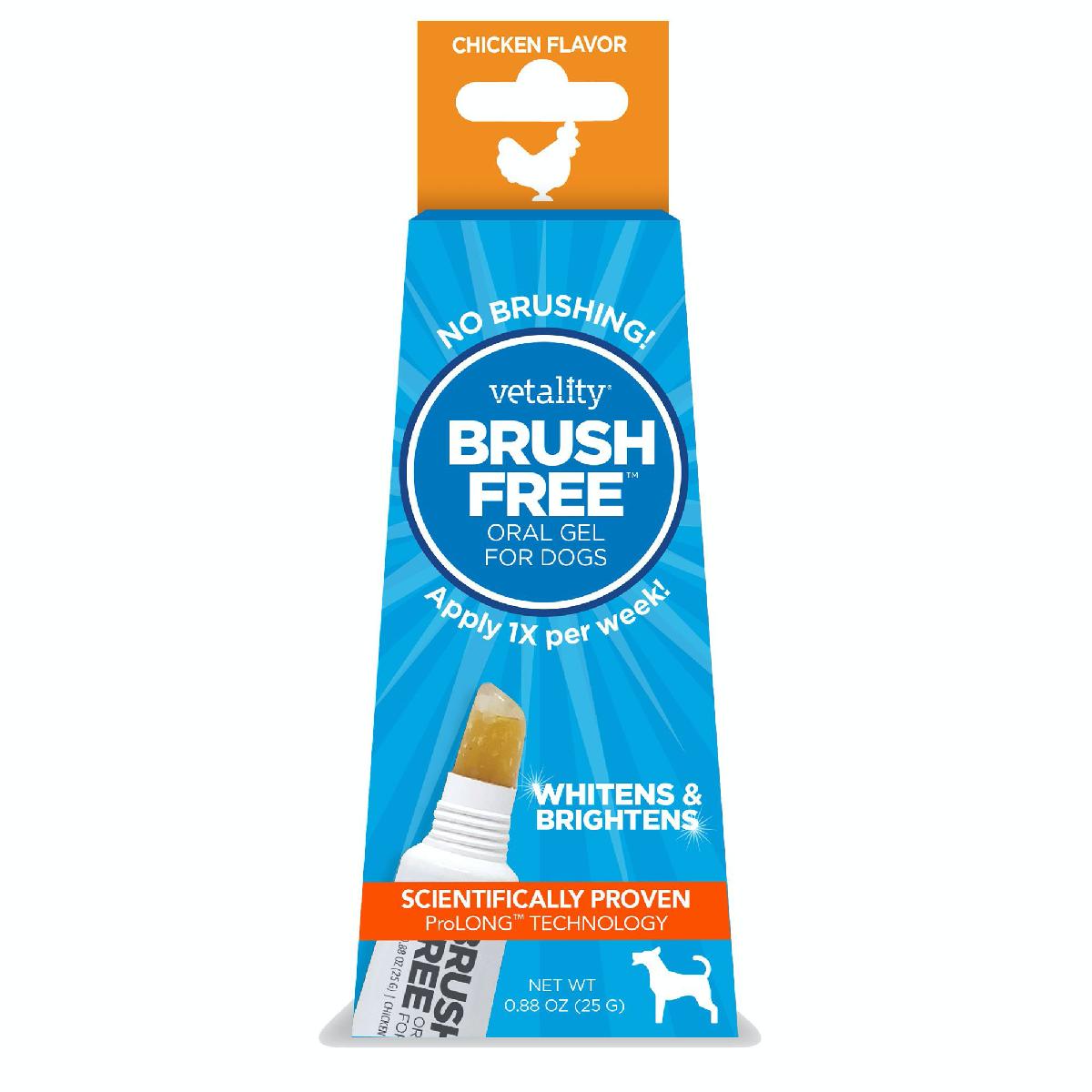
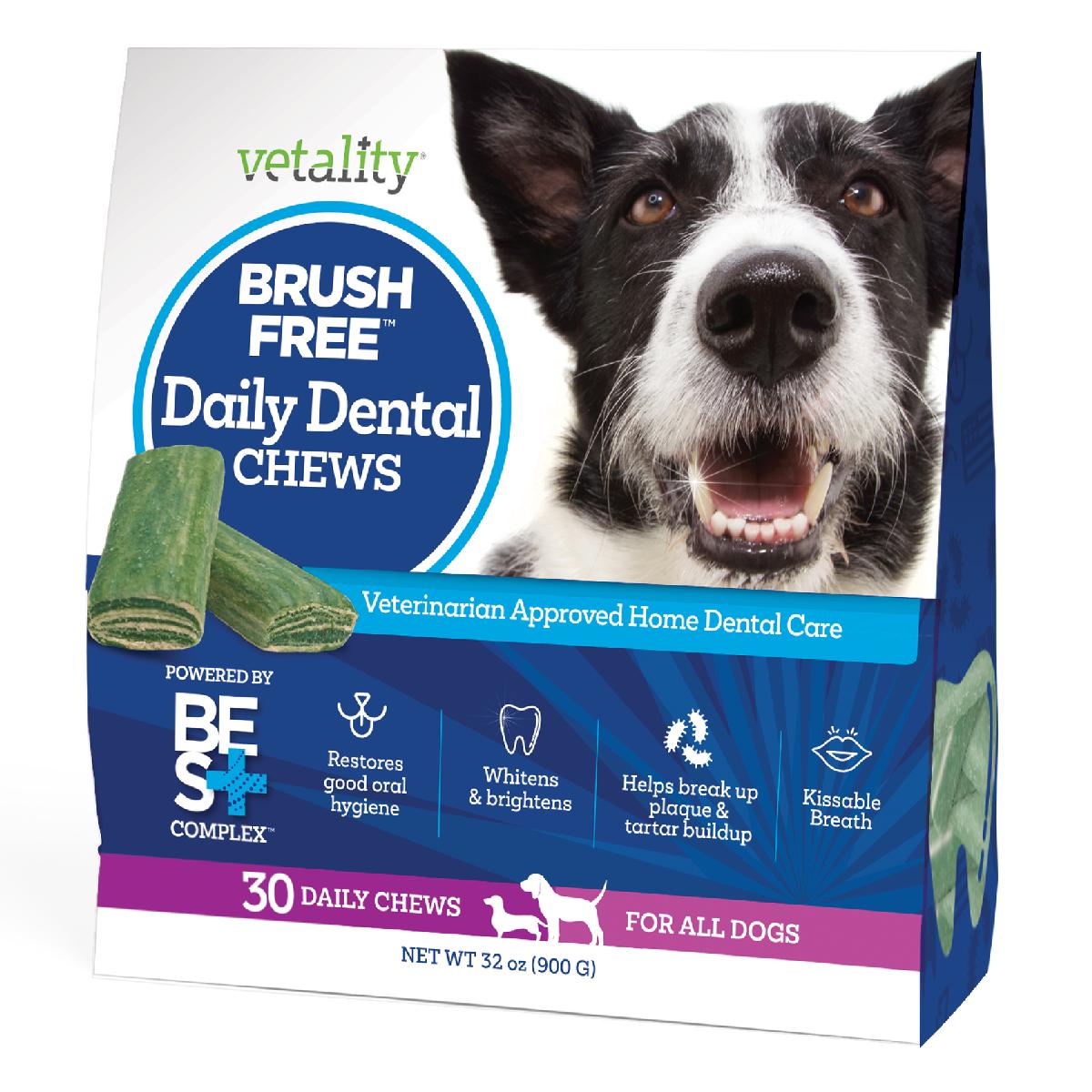
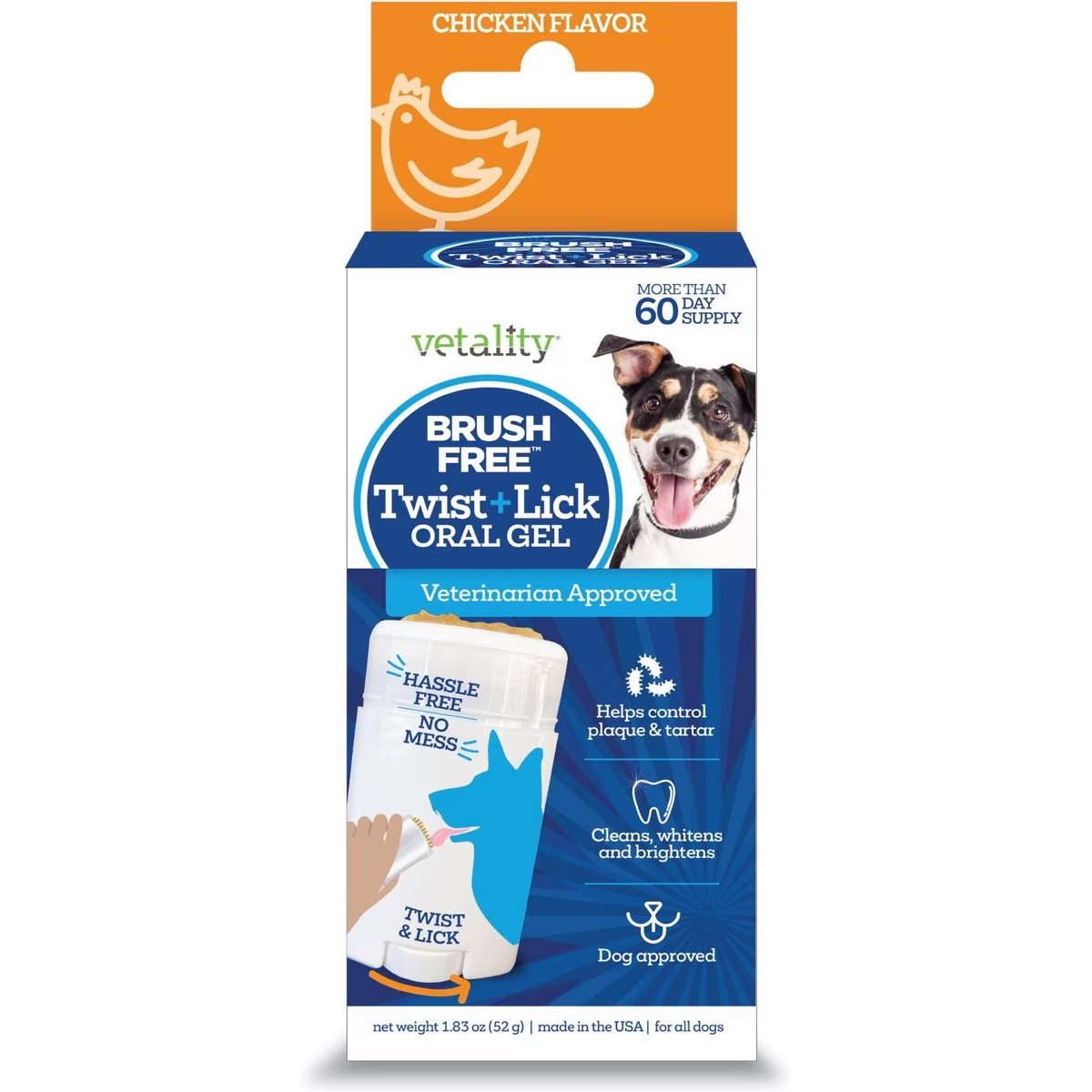
Dogs use their teeth for so much more than eating. The mouth connects them to the world. They pick things up, explore new textures, and snuggle with their humans. They don't have hands to hug. Dogs instinctively use their mouths instead. When a dog's oral health is suffering, and bad dog breath overwhelms them, their humans may be less inclined to cuddle back.
For these reasons, dog oral hygiene is vital not only for eating comfort but also for social relationships, confidence, mental health, and overall dog health. Dental treats for dogs are an important part of helping dogs maintain that connection with the world.
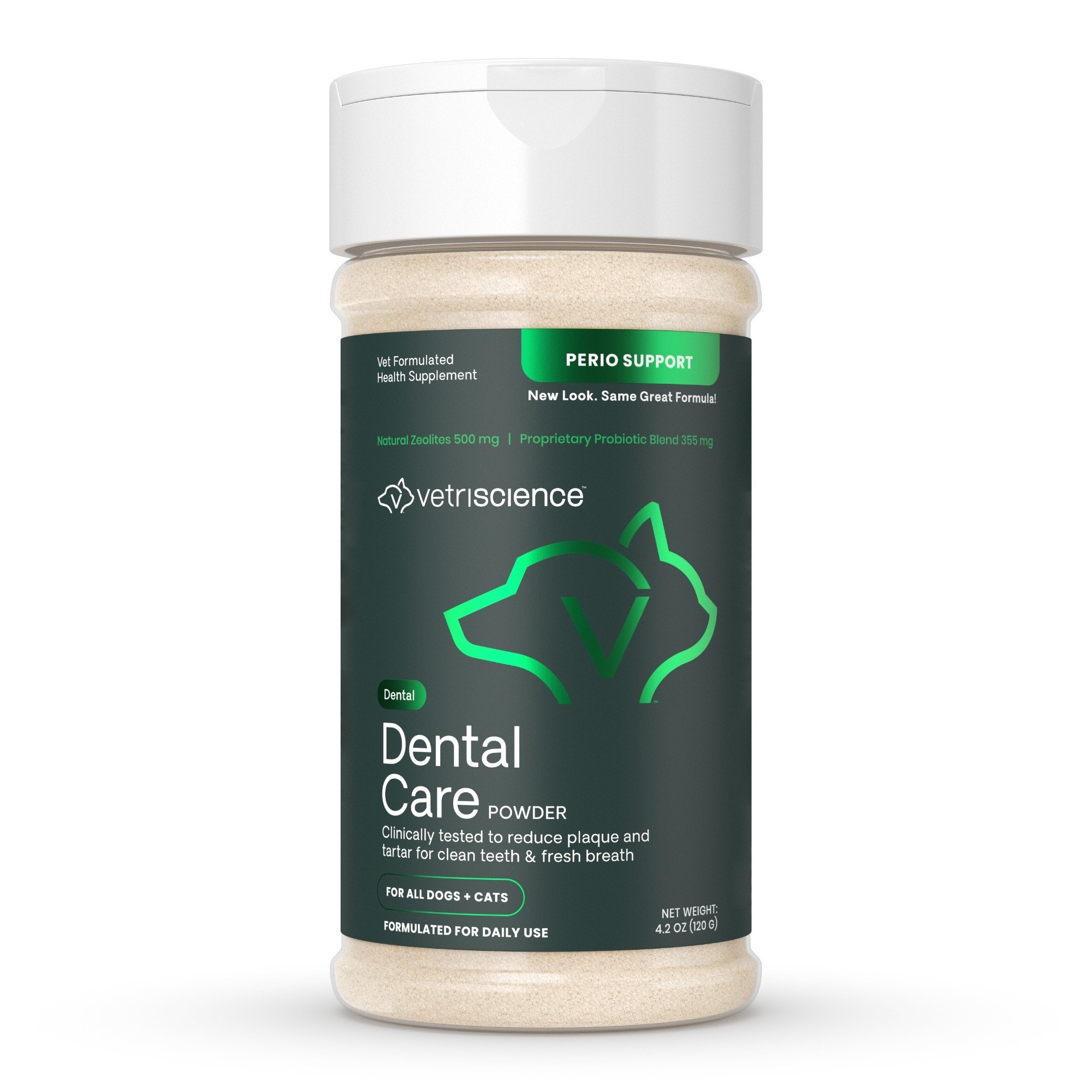
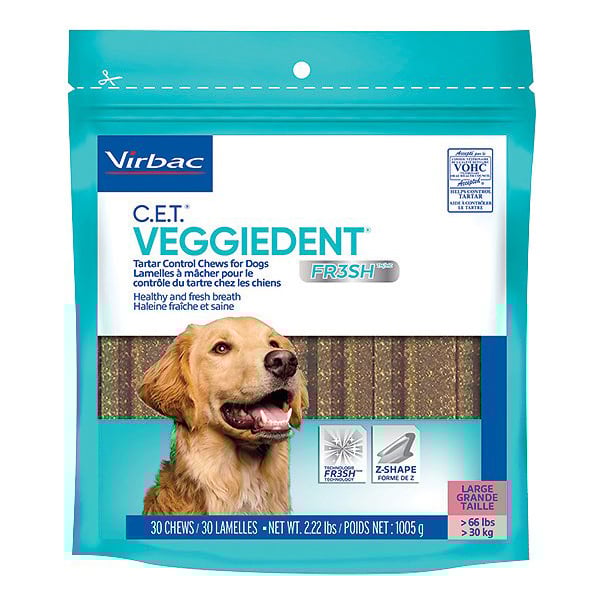
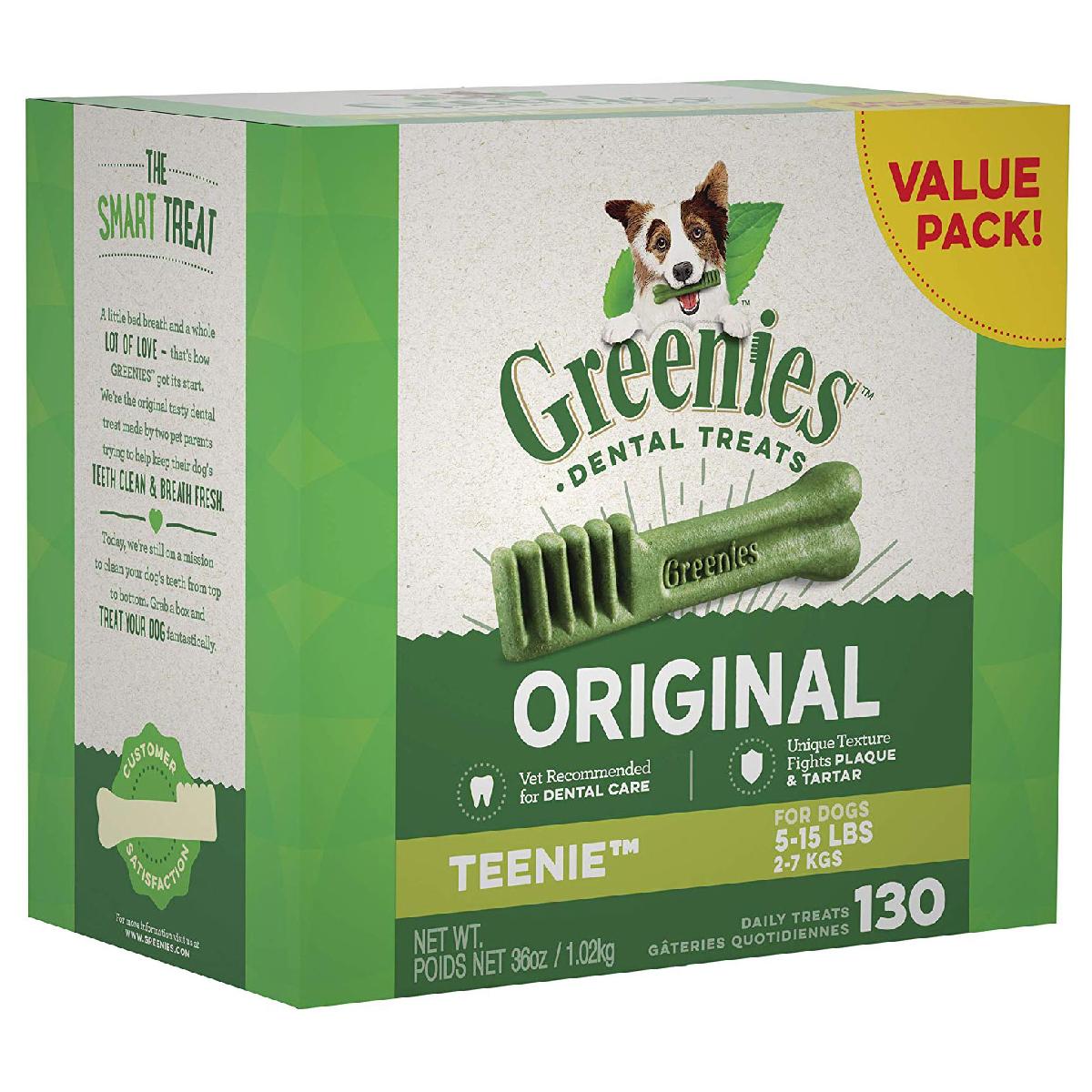
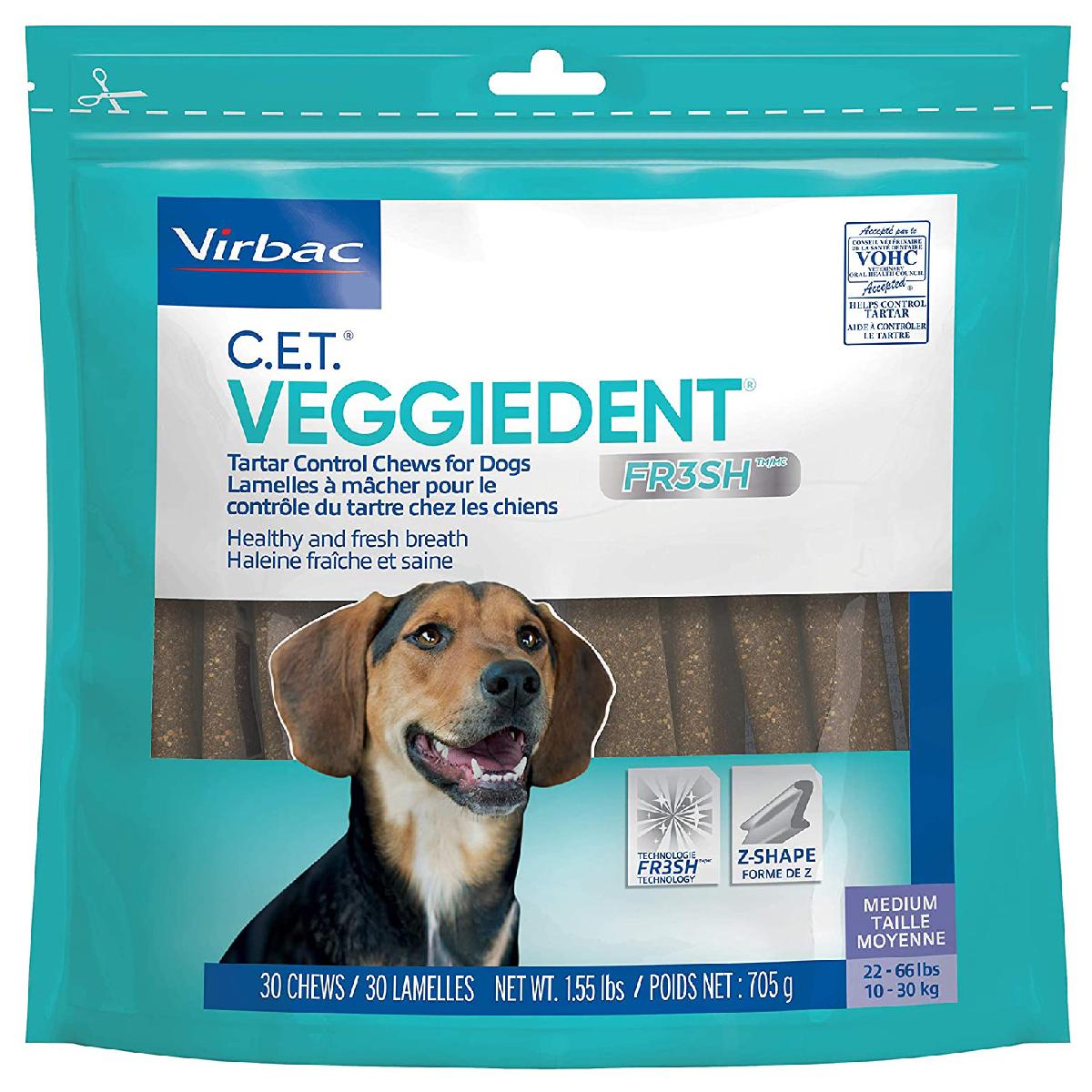
Dog dental care products can reduce plaque and tartar buildup, eliminating the places harmful bacteria hide, reducing bad breath, and promoting dog oral health.
FAQs
How do dental treats and chews help improve my dog's oral health?
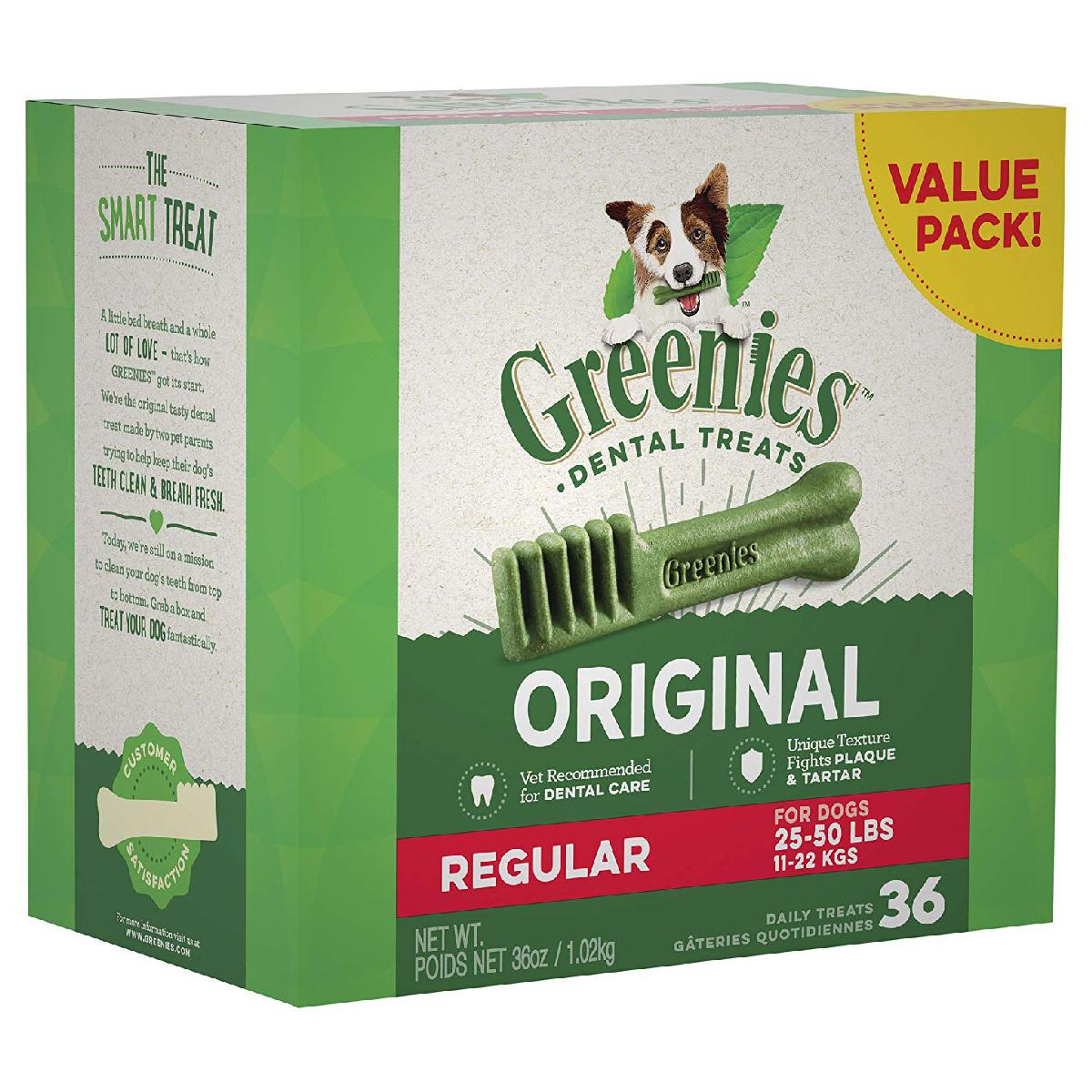
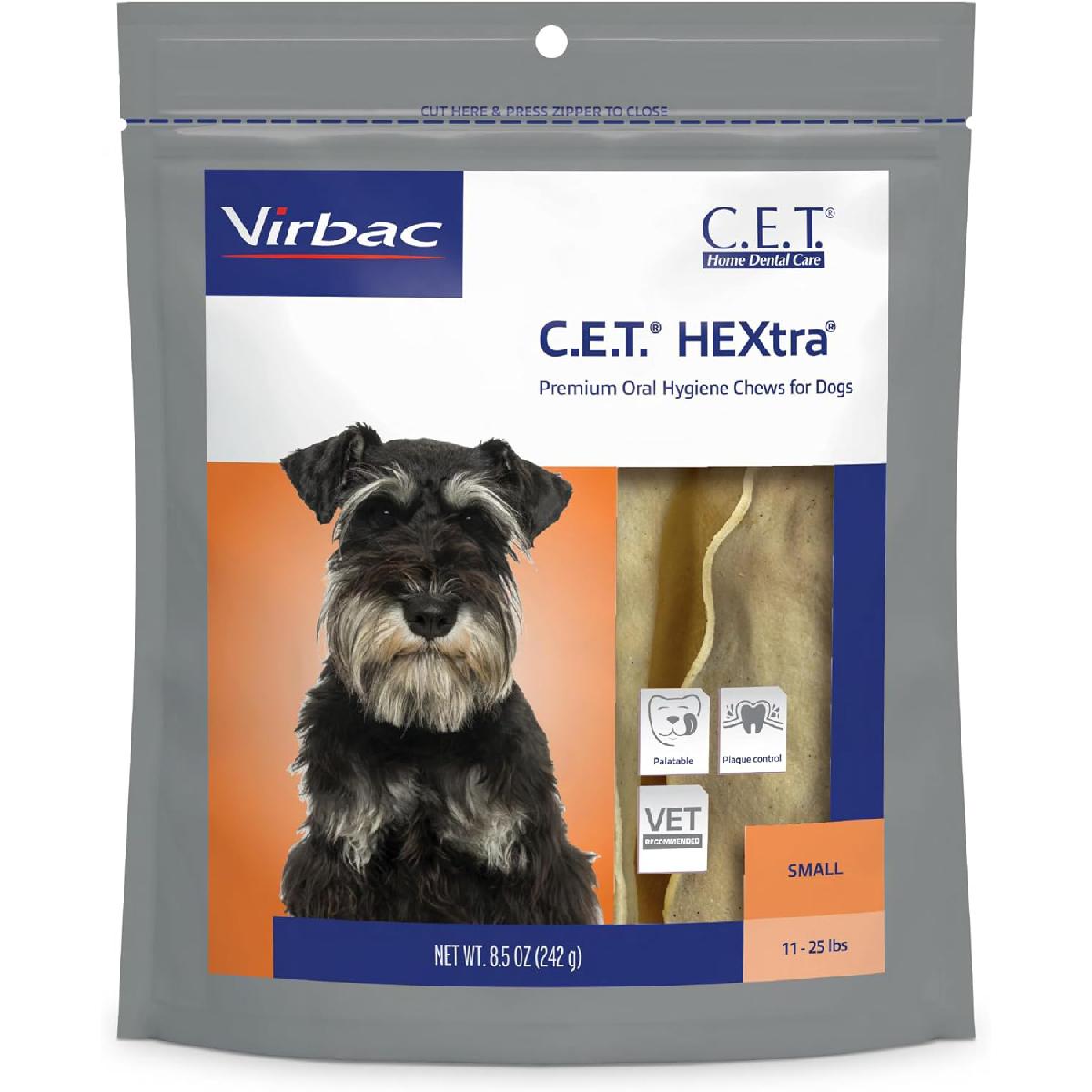
Bacteria produce acid that destroys teeth and gums, leading to tooth decay and pain when eating. This acid also makes breath acidic and stinky. So, reducing the bacteria count can restore pH in a dog's mouth, making their breath smell fresher and cleaner. Dental chews for dogs work mechanically by providing an abrasive surface.
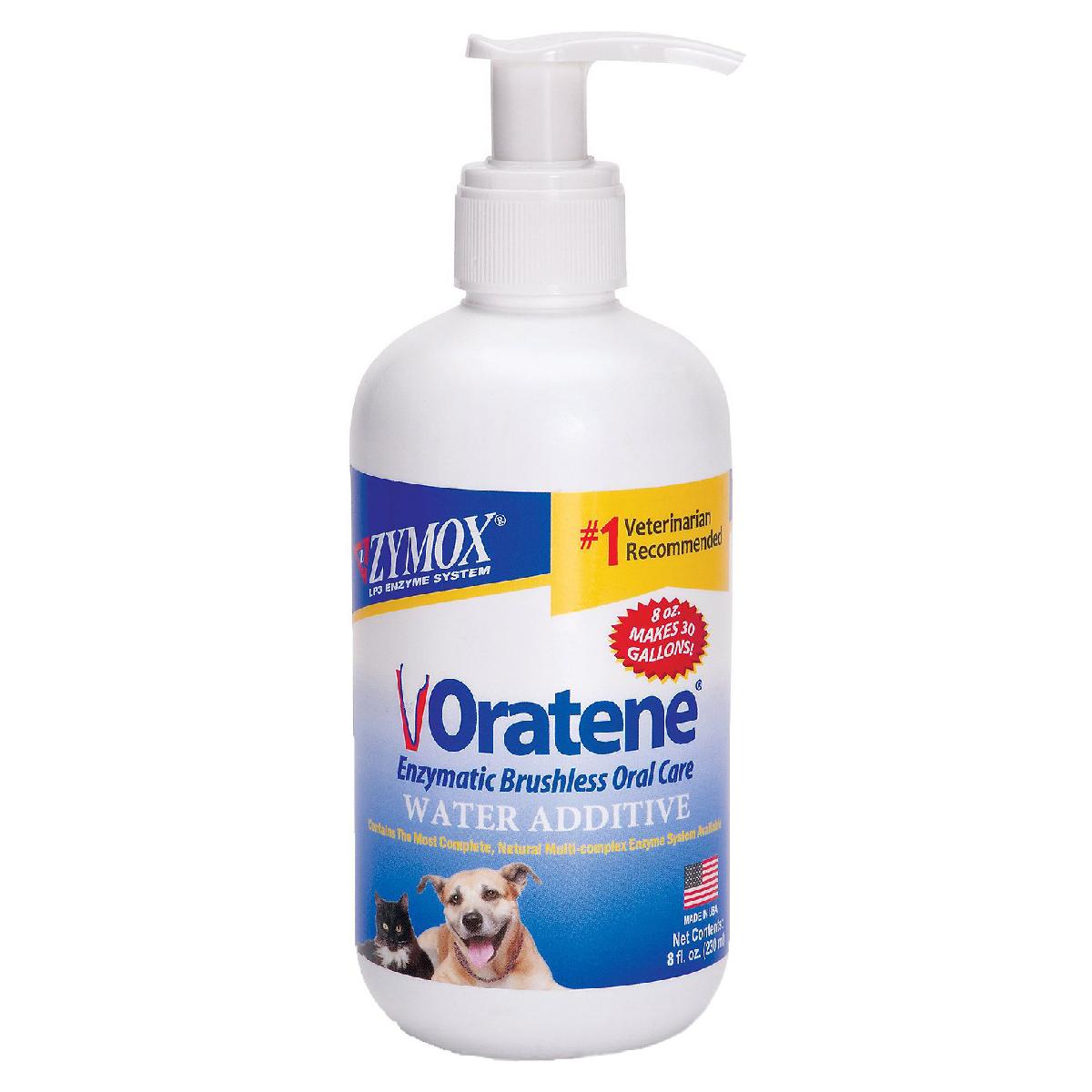
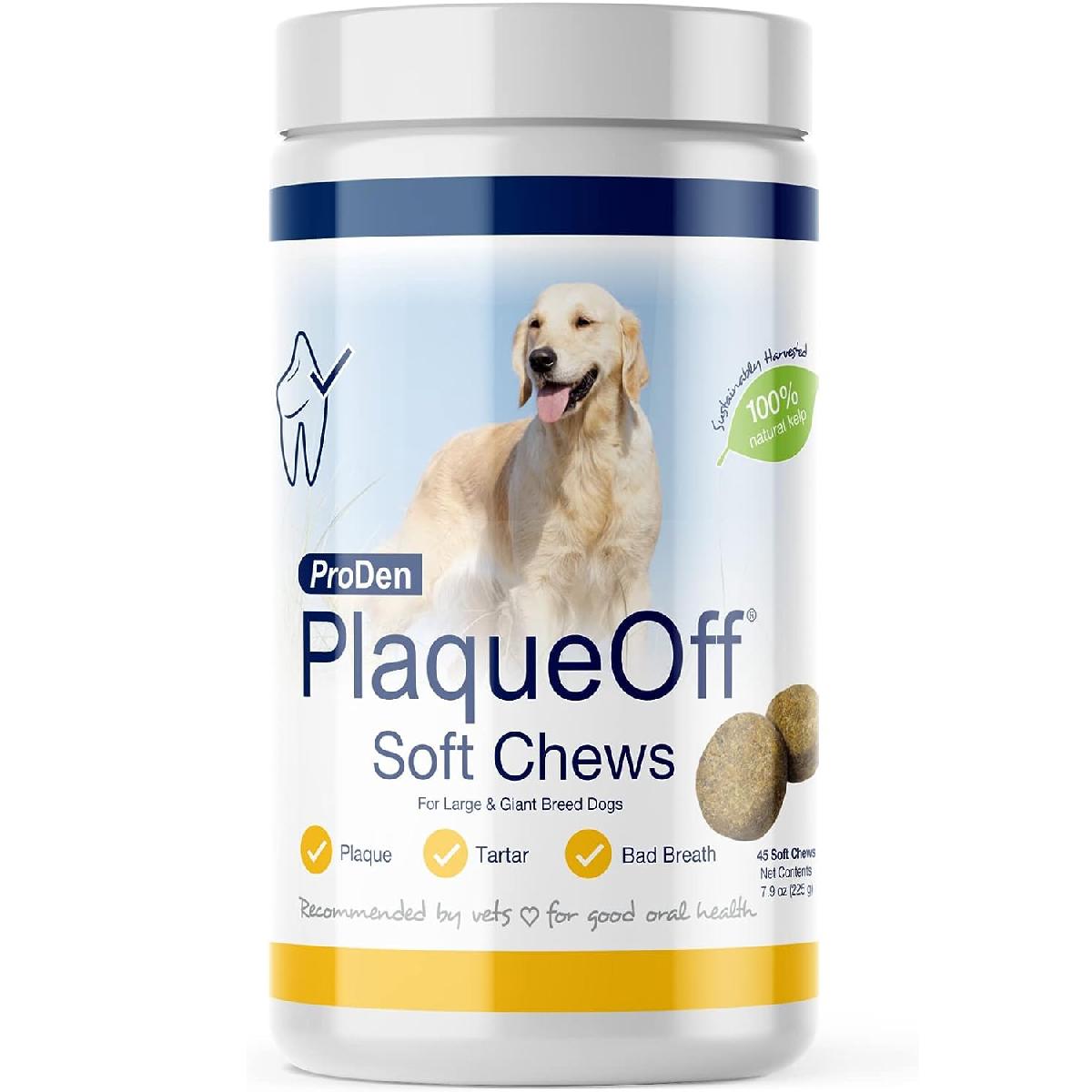
As your dog chews, they scrape plaque and tartar off the teeth while massaging the gums to promote better blood flow and healthy tissues. Both dog dental chews and water additives may also contain natural ingredients that promote oral health by fighting bacteria and reducing inflammation. Healthy Omega 3 fats, hemp, kelp, and prebiotics have each shown an ability to support oral hygiene.
How often should I give my dog dental treats for the best results?
Just like humans need to brush every day, your dog should get a few dental treats daily for maximum effectiveness. Regular use keeps tartar from building up and mineralizing, which makes it harder to remove. You should generally follow product guidelines.
What size or type of dental chew is best for my dog's breed and age?
Choose chews that are appropriately sized and not so hard that they may cause dental fractures.
Select products made with safe, digestible components, especially for dogs with dietary sensitivities.
Durable chews are preferable for aggressive chewers, while softer options may suit gentle chewers or senior dogs with existing oral health problems.
Can puppies and senior dogs safely eat dental chews?
Yes. Dogs from puppies through seniors can enjoy dental treats for dogs. Just remember to select dog dental care products appropriate for your dog. For puppies, select softer chews. The manufacturers of these products designed them for young dogs to accommodate their developing teeth and gums. For seniors, go for gentle chews on aging teeth and gums, considering any existing dental issues. When in doubt, speak with your dog's veterinarian.
Can dental chews help with a dog's bad breath?
Certainly! Dental chews can help reduce bad breath in dogs by mechanically removing plaque and tartar buildup that harbor bacteria. This is the primary cause of halitosis (bad breath). Regular use promotes fresher breath and improved oral hygiene.